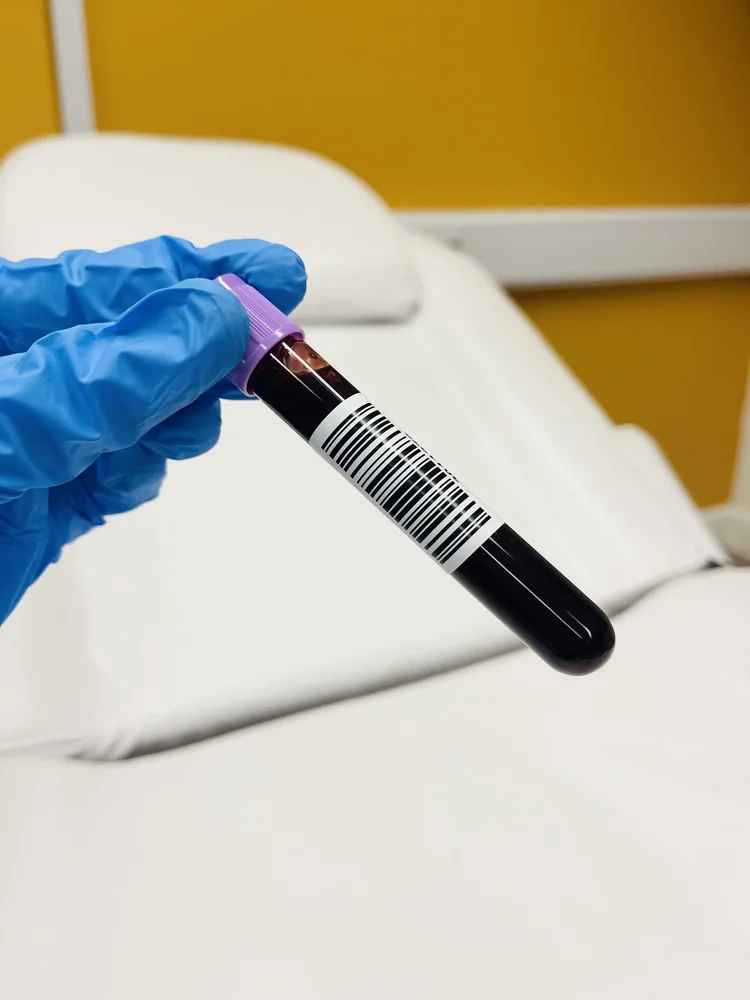
Private NIPT Blood Test
Non-invasive prenatal screening from 10 weeks. Screens for Down’s, Edwards’ and Patau’s. Includes a free Early Pregnancy Scan. Results in 7–10 working days.
Choose your NIPT package
All options include a free Early AssureScan before your blood test — select the level of screening that’s right for you.
-
40-minute appointment
Essential NIPT screening with an Early AssureScan included.
Includes:Free Early AssureScan before your blood test
Screens for Down’s (Trisomy 21), Edwards’ (Trisomy 18), Patau (Trisomy 13)
Optional gender confirmation by blood test
-
40-minute appointment
Includes core NIPT screening plus sex chromosome aneuploidy screening.
Includes:Free Early AssureScan before your blood test
Screens for Down’s (T21), Edwards’ (T18), Patau (T13)
Screens for sex chromosome aneuploidies (X & Y conditions)
Optional gender confirmation by blood test
-
40-minute appointment
Includes core NIPT screening plus selected microdeletions.
Includes:Free Early AssureScan before your blood test
Screens for Down’s (T21), Edwards’ (T18), Patau (T13)
Screens for sex chromosome aneuploidies
Screens for selected microdeletions (incl. DiGeorge 22q11.2, 1p36 deletion, Smith-Magenis 17p11.2, Wolf-Hirschhorn 4p16.3)
Optional gender confirmation by blood test
-
40-minute appointment
Our most comprehensive screening option (samples required from both parents).
Includes:Free Early AssureScan before your blood test
Screens for Down’s (T21), Edwards’ (T18), Patau (T13)
Screens for sex chromosome aneuploidies
Screens for microdeletions
Screens for 100 monogenic (single-gene) conditions
Optional gender confirmation by blood test
Our NIPT Blood Test is Non-Invasive and Safe
During pregnancy, your blood contains tiny fragments of DNA from you and your placenta.
At your appointment, our healthcare team takes a simple blood sample from your arm. We then screen to estimate the chance of certain chromosomal conditions, including Down’s syndrome (Trisomy 21), Edwards’ syndrome (Trisomy 18) and Patau syndrome (Trisomy 13).
From 10 weeks, NIPT can give you earlier clarity and reassurance about your pregnancy.
What Does The Test Include?
Free Early AssureScan (worth £104)
Standard NIPT screening for Trisomy 21, 18 and 13 (Down’s, Edwards’ and Patau)
Results in 7–10 working days (once received by the laboratory)
1 printed scan photo of your choice
Scan report + well-being form
All digital scan images emailed after your appointment
FAQs
-
NIPT stands for Non-Invasive Prenatal Testing. It’s a simple blood test done during pregnancy (usually from 10 weeks) that checks your baby’s DNA in your blood to estimate the chance of certain chromosome conditions, like Down’s syndrome (Trisomy 21), Edwards’ syndrome (Trisomy 18), and Patau syndrome (Trisomy 13).
It’s non-invasive, meaning no needles go near the baby — it’s just a blood sample from your arm.
-
You will need to have a full bladder for the scan to be clear.
If you are having the Comprehensive test, the father of the baby will need to be present and should not eat or drink (even chewing gum) for 30 minutes before the appointment.
-
NIPT testing can be performed as early as 10 weeks of pregnancy through to delivery.
-
No screening test is 100% accurate. NIPT is highly informative, but it’s still a screening test — meaning it estimates probability. If results are higher chance, confirmatory (diagnostic) testing may be recommended.
-
There aren’t reliable “symptoms” you can feel during pregnancy that confirm Down’s syndrome. Screening tests (blood tests and scans) estimate the chance, and diagnostic tests are needed to confirm.
-
NIPT results usually come back as lower chance or higher chance. A higher-chance result does not confirm a diagnosis, you’ll normally be offered follow-up options (such as diagnostic testing) to confirm. Your screening team will explain your choices and next steps.
-
The human genome is sorted into twenty-three pairs of chromosomes. Genetic conditions are caused by unwanted changes in the genome that happen during conception. There are three types of genetic conditions:
Aneuploidies are genetic conditions that occur when a chromosome has an extra copy (trisomy) or is missing a copy (monosomy)
Microdeletions are genetic conditions caused by the deletion of part of a chromosome
Single gene diseases are genetic conditions caused by pathogenic alterations (mutations) in a gene
-
VERAgene is the only non-invasive prenatal test that can simultaneously screen for aneuploidies, microdeletions, and single gene diseases. The diseases screened by VERAgene are associated with moderate to severe phenotype with significant impact on quality of life. These genetic diseases exhibit symptoms such as congenital anomalies, development delays, hearing loss, blindness, or metabolic diseases.
-
VERAgene can screen for trisomies such as Down's syndrome, Edwards' syndrome, Patau syndrome, sex chromosome aneuploidies, microdeletions such as DiGeorge syndrome, 1p36 deletion syndrome, Smith-Magenis syndrome and Wolf-Hirschhorn syndrome and 100 monogenic diseases with autosomal recessive and X-linked inheritance. These include Beta Thalassemia, Cystic Fibrosis, Tay-Sachs disease, Canavan disease, Sickle Cell disease, Phenylketonuria, Alport syndrome and many more. By combining detection of aneuploidies and microdeletions with the screening of monogenic diseases, VERAgene provides a comprehensive picture of the pregnancy using a single test.
-
Down's syndrome, Edwards' syndrome and Patau syndrome are genetic disorders caused by chromosomal trisomies. Down's syndrome is caused by an extra copy of chromosome 21 whereas Edwards' syndrome and Patau syndrome are caused by an extra copy of chromosome 18 and chromosome 13, respectively. Down's syndrome is characterised by intellectual impairment and congenital abnormalities. Down's syndrome occurs approximately in 1 in 700 pregnancies but is more frequent in pregnancies in women over 35. Edwards' syndrome and Patau syndrome are less common occurring in 1 in 3000 and 1 in 10000 pregnancies, respectively. Edwards' and Patau syndromes are characterised by severe congenital abnormalities and babies rarely survive past the first year of life.
-
Sex chromosome aneuploidies are genetic disorders caused by the presence or absence of a sex chromosome. The 23rd pair of chromosomes determine the sex of an individual. Women have two X chromosomes and men have one X and one Y chromosome. There are four major sex chromosome aneuploidies:
Turner syndrome is characterised by the presence of a single X chromosome.Triple X syndrome is characterised by the presence of three X chromosomes.
Klinefelter syndrome is characterised by the presence of two X chromosomes and one Y chromosome.
Jacob syndrome is characterised by the presence of one X chromosome and two Y chromosomes.
-
Microdeletions are genetic conditions caused by the loss of a part of a chromosome. Microdeletions are characterised by congenital abnormalities and intellectual impairment. The severity of the symptoms varies depending on the size and location of the microdeletion. The most common microdeletion syndrome is DiGeorge syndrome which occurs approximately once in 1000 pregnancies. The prevalence of DiGeorge syndrome increases to 1 in 100 in pregnancies with major structural anomalies such as congenital heart disease.
-
Monogenic diseases are caused by a variant (a version that is different from the standard) in a single gene (single gene diseases). Such conditions can be autosomal dominant which are caused when a variant exists on only one chromosome, or autosomal recessive where a variant needs to be present in both chromosomes. There are also X-linked diseases, where the mutation is always on the X chromosome, and this affects males and females differently. VERAgene analyses over 2000 variants to detect 100 autosomal recessive and X-linked monogenic diseases.
-
Autosomal diseases are conditions that affect chromosome pairs 1 to 22, the ‘autosomal’ chromosomes. These genetic conditions can either be autosomal dominant or autosomal recessive.
-
X-linked diseases are those that affect the X chromosome on the 23rd chromosome pair, which determines gender. Generally, they are not as severe as autosomal diseases, but they may affect quality of life as common symptoms include fertility problems and cognitive difficulties. X-linked diseases are most often passed from affected or carrier mothers to their sons, as fathers pass the Y chromosome on all their male offspring.
-
As males have one X and one Y chromosome, when their X chromosome has a mutation the disease always manifests. Females have two X chromosomes, and when one of their X chromosomes has a mutation they are carriers of an X-linked disease. They may exhibit some symptoms of the disease or no symptoms at all, due to ‘X-inactivation’ – a mechanism that always ‘shuts off’ one of the two X chromosomes in females so they don’t have twice the number of genes as males which would be toxic. As this process is random in the female cells, the X chromosome with the mutation can be silenced in varying degree in female carriers; thus explaining the symptom variability shown.
Hear From Our Expectant Mothers